Section 8: Shipping
- Shipping Document Requirements
- All children’s footwear (kid’s and toddler) will need the test report and COC/GCC form sent to BILLY Footwear with the other standard shipping documents. See details in Section 3: Testing and Certification.
- Invoice: Factory and its representative must provide a corresponding invoice in Excel form at the time the container is handed over to our Freight Forwarder. The invoice should include the BILLY PO# and the parent sku (not size level) with total pairs shipped.
- Packing List: Factory and its representative must fill out the packing list using BILLY Footwear’s template (download a template via below link) and send it to Vendor_Compliance@billyfootwear.com as soon as the container is handed over to our Freight Forwarder.
Incorrect packing list will result in chargeback of USD 250.00 per occurrence. - Interim Footwear Invoice (IFI): Provide an Interim Footwear Invoice (IFI) for each style with the packing lists for each shipment. The US Customs Broker needs to have these included in each document packet for their records. All widths can be included on one sheet. (download a template via below link)
- Split Shipments are NOT authorized unless communicated and approved by BILLY Footwear team. Reasons for the split shipment must accompany the request via email sending to Vendor_Compliance@billyfootwear.com and shall be authorized on a case-by-case basis. Monetary penalties may be assessed with each approval. General rule of thumb, each PO must be shipped once and in full.
- Shortages are NOT allowed unless communicated and approved by BILLY Footwear team. Reasons for the shortage(s) must accompany the request via email sending to Vendor_Compliance@billyfootwear.com and may be authorized on a case-by-case basis. Monetary penalties may be assessed with each approval.
- Delays are NOT allowed unless communicated and approved by BILLY Footwear team. Reasons for the delay(s) must accompany the request via email sending to Vendor_Compliance@billyfootwear.com and may be authorized on a case-by-case basis. Monetary penalties may be assessed with each approval.
SECTION 8-A SHIPPING PROCEDURES
Designated Forwarder:
To obtain forwarder contact info for non-USA destinations, please contact Vendor_Compliance@billyfootwear.com
| DESTINATION | PRIMARY | CONTACT |
| USA | SGL | Xiamen: Scan Global Logistics (Shanghai) Co., Ltd., Room 3302-3303, Bank Center, No.189, Xiahe Road Xiamen 361003 China +86 592 3118611 +86 592 3118711 Jasmine Wang jawan@scangl.com Summer Zhou suzho@scangl.com Abby Xie abxie@scangl.com |
| USA | SGL | Ningbo: Scan Global Logistics (Shanghai) Co., Ltd. Room 2004, Building A, Pacific Plaza, No. 555 Jingjia Road Ningbo 315040 China +86 574 2772 1888 +86 574 2772 1899 Rachel Shao rsha@scangl.com |
| USA | SGL | Bogota: Scan Global Logistics S.A.S Calle 108 # 45-30 Torre 2, Of. 707 111111 Bogota D.C Colombia +57 317 4319273 arndr@scangl.com |
Vessel Booking Requirements:
- Factory MUST send the initial vessel booking request to the forwarder at least three (3) weeks in advance of the XF date to secure the space on a vessel. If this requirement is not met, a USD 750.00 chargeback will be issued per occurrence.
- Please note any delay caused by missing a vessel due to factory’s failure to send the booking request at least three (3) weeks in advance, will also be subject to a delay penalty.
- Any space canceled after S/O will be subject to up to USD 1,500 chargeback for each container, no exception. This is equal to the cancellation penalty issued by the steamship line.
SECTION 8-B FACTORY-LOAD CONTAINER REQUIREMENTS
To maintain the consistency for BILLY Footwear inbound freight, ALL containers MUST meet the below loading requirements, and if loaded improperly, the factory will receive a chargeback for the labor involved in staging and re-sorting the container.
Load Requirements
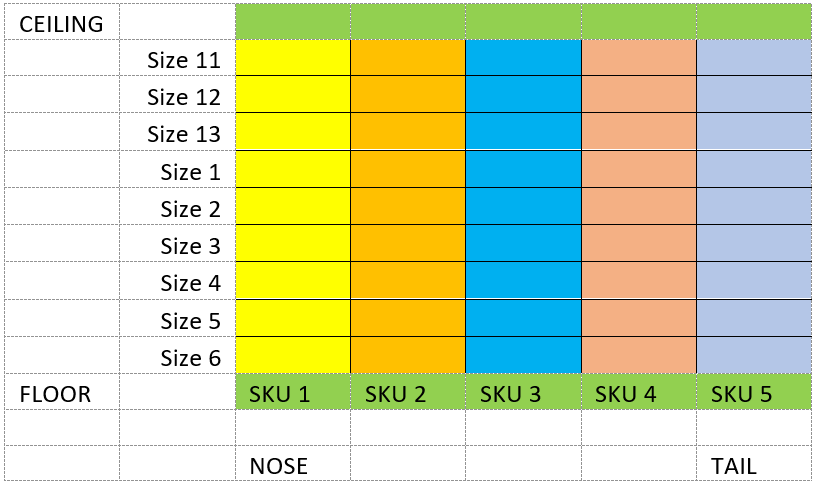
A. All cargo will be floor loaded and block stowed from nose to tail. The factory is required to pre-sort and segregate cargo by SKU#
B. Each container must be fitted with container desiccant packs/poles. This includes ALL containers, ALL destinations.
Brand: Clariant
Type: Container Dri II Pole
Requirement: 6-8 poles per 40′ container

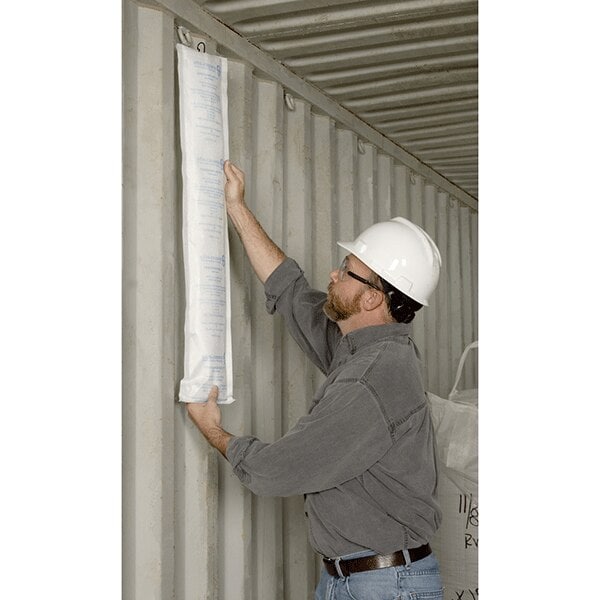
C. Container loading process nose to tail in the following sequence while also maintaining the load instructions found in section “a” above:
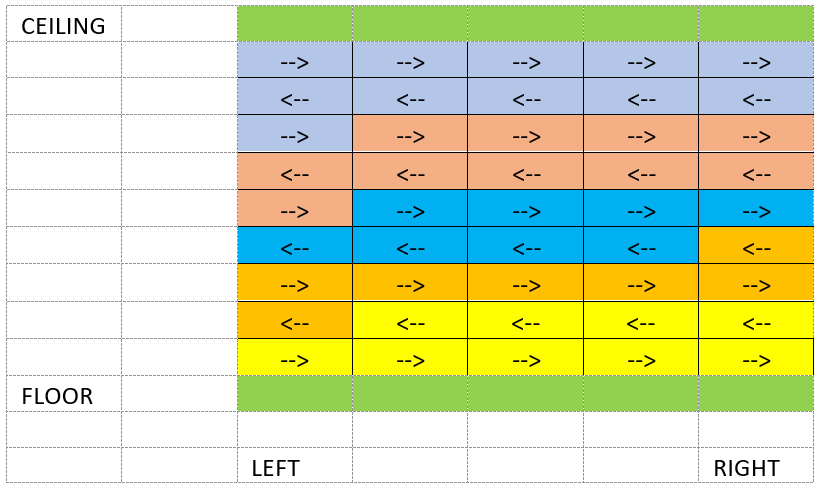
- Container loading process is nose to tail in a serpentine fashion.
- Cargo loading is by SKU per master carton box size. To be loaded in sequential size runs (example: all size two (2) loaded back to back, followed by all size three (3)).
Little Kid size 11-1
Big Kid size 2-7
etc. - Loading must always start in the lower left corner of the nose of the container and move to the right corner.
- Use best judgement to optimize container space. Limit instances of splitting a SKU between containers and/or splitting a PO between containers. Please notify Vendor Compliance (vendor_compliance@billyfootwear.com) if you need to split a SKU or PO between multiple containers.
D. Container must be compliant with the SOLAS container weight verification requirement. Estimating weight is not permitted. There are two permissible methods for weighing: Method 1, which requires the container to be weighed after it has been packed, or Method 2, which requires weighing all the cargo and contents of the container before loading and adding those weights to the containers tare weight as indicated on the door end of the container. Under the rule, the shipper named on the ocean bill of lading is the party responsible for providing the container carrier and the terminal operator with a signed Verified Gross Mass (VGM) for the packed container, based on an actual weighing of the goods. Further, there is a requirement that carrier and terminal operator do not load a packed container aboard a ship unless they are in possession of the shipper provided VGM for that container and must use the VGM in creating a seaworthy stowage plan for the ship.
SKUs loaded “left to right- right to left” cross sectional “floor-to-ceiling” sequentially with continuance throughout the container from nose to tail.
Lateral (side view) of the container Nose-to-Tail
Frontal view of the container – Start load Left-to-Right continuing Right-to-Left, Floor-to-Ceiling
SECTION 8-C CONTAINER LOADING UTILIZATION AND SEAL REQUIREMENTS
- If you complete Full Container Load (FCL) please be advised there is an ISO (International Organization for Standardization) bolt seal requirement (ISO 17712:2010). You must be in compliance with through your transportation partners providing ocean containers/bolt seals. United States Customs and Border Protection (CBP), your purchasing client’s partner in the C-TPAT program (Customs Trade Partnership Against Terrorism), has issued a statement notifying all parties that effective March 1, 2012 all bolt seals used for ocean container shipments must meet updated ISO standard requirements that include:
- Testing to determine a seal’s classification for physical strength (as a barrier of entry)
- Process auditing of the seal manufacturer’s security-related business practices
- Testing (pass/fail) of a seal’s ability to indicate evidence of tampering
- 18mm minimum width diameter of bolt seals
- Factory is required to follow the BILLY Footwear container loading utilization requirements. To facilitate maximizing container usage while preventing damage to shoes.
- Factory is required to utilize container space per determining dimensions and filling to capacity. (Refer to below pictures).
- Proper placement and rotation of case may be required if straight packing yields less than adequate space.
- Factory may not place loose shoe boxes in container for reasons of high susceptibility to damage.
- If after determining contain size is improper for case load, a new container may need to be ordered, or split container per customer’s decision.
- When damage is incurred due to improper loading of container, factory will be responsible for a USD 500.00 fee per incident and responsible for all damaged materials.
- IF cartons do happen to get wet during the loading process, the factory should wipe down the box to remove excess moisture. If at any time a carton becomes “soaked” from rain or moisture, the factory must not ship the wet carton and instead repack the shoes in a new dry carton.
Proper loading techniques
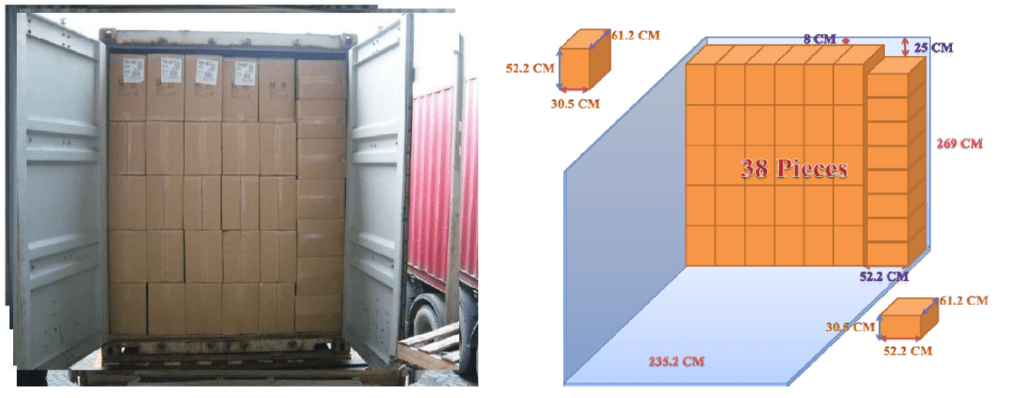
Improper loading techniques

SECTION 8-E OCEAN CONTAINER INSPECTION
– Factory is responsible for ensuring that their trucker MUST inspect the container before it is gated out of the container yard to be sure there is no damage to the container. Containers should be exchanged at the terminal if the problem is discovered prior to gate out. If the problem is discovered after the container is gated out, it might not be possible to exchange the container on the same day.
-Factory is responsible to inspect the container prior to loading to be sure there are no problems with the container and requesting new equipment if exceptions are found. To avoid missing CY cutoff time, the factory must plan ahead to get the container, so that in the event there is a problem with the container, it can be exchanged in enough time to avoid missing CY cutoff.
-The container inspection applies to the factory loads however for LCL shipments going to the CFS, the factory is still responsible to make sure that the cartons are dry when loaded into the container or truck and have the cartons delivered to the CFS in good order The forwarder is responsible to make sure the container they use is in good order.
-When it is raining, the factories must do what they can to protect against loading wet cartons into the container.
- Factories MUST be sure that if they are staging the cartons prior to loading them into the container, they are staging in a covered area.
If the factory uses a chute for loading, they need to be sure the roof to the chute does not leak and sides are not open to prevent cartons from getting wet from the rain.
OCEAN CONTAINER INSPECTION CRITERIA
The following checklist will assist you in inspecting the container to be sure it will properly protect our cargo. Containers that leak or have inherent defects that endanger the cargo or pose a safety hazard to personnel must be rejected.
The interior must be free from splinters, snags, dents, or bulges. These may interfere with loading. Serious defects indicate the container is structurally unsound.
•Watertight Integrity—”Light” tests whereby you enter the container, have the doors closed and look for light entry via the roof, side and door panels and deck are a must. Also, previous patches and re-pairs must be checked to ensure they are watertight.
•Fittings—Cargo tie-down cleats or rings should be in good condition and well anchored. If ventilation openings are present, be sure that they have not been blocked off, and that they are equipped with baffles to prevent rain or sea water entry.
•Cleanliness— Free of residue from previous cargo particularly odors that may taint our goods. Look for signs of mold, mildew, insects, or other pests that could cause damage while in transit. Also, check the container for nails or protruding fastenings that might puncture cargo package. The exterior must be free from dents, bulges, or other damages; all may interfere with handling.
•Doors—Be sure doors can be securely locked and sealed: Check that door gaskets are in good condition and watertight when closed. Inspect door hardware closely If bolts or nuts can be easily removed from the outside with simple tools, it means that the container can be opened without breaking the seal or lock—an attractive invitation to the pilferer.
•Fittings—A quick look at the lifting fittings at each corner of the container will reveal those that are obviously damaged or unsafe. Check the fittings that secure the container to the trailer chassis; they should all be in working order and in use.
•Covers/Hatch Check hatch panels for close watertight fit.
The following is a partial checklist of typical types of damage.
•Front
- Front Panel—Dented, torn, holed, or punctured.
- Patches—Loose, not of same material as panel, not sealed or riveted with waterproof Customs-approved rivets, poor welds, not primed or painted.
- Top Rail—Bent, cut, crushed, or fractured.
- Comer Posts—Bent, broken, cut, gashed, or distorted.
- Upper and Lower Corner Fittings and Attachments—Fractured or distorted fitting, cracked attachment welds.
- Rivets—Loose or missing.
- Welds—Improperly made, not primed, or painted.
•Sides
- Panels—Dented, torn, holed, or punctured.
- Corner Posts—Bent, broken, cut, gashed, or distorted.
- Upper and Lower Corner Fittings and Attachments—Fractured or distorted fittings, cracked attachment welds.
- Door Holdbacks—Damaged or missing.
•Rear
- Doors—Difficulty in opening and/or closing.
- Door Panels (Metal or other)— Torn, cut, holed or punctured.
- Door Locking Bars (Rods)— Seized, bent, broken or twisted.
- Door Locking Bar Cams—Bent or broken.
- Door Handle and Retainers— Broken, bent or missing.
- Door Cam Lock Retainers (Keepers)— Bent or broken.
- Door Hinges—Broken, torn, twisted, binding, or seized.
- Door Seals (Gasket and attachments)— Cut, torn or loose.
- Door Header—Cut, broken, distorted, or dented.
- Door Sill—Cut, fractured, or distorted.
- Anti-Rack Device (if any)—Bent, cut, damaged or broken.
- Rain Gutter—Bent, broken, or crushed.
•Roof
- Panel—Punctured, dented, or distorted.
- Upper Comer Fittings and Attachments—Fractured or distorted fittings, cracked attachment welds.
- Corner Protection Plate (where provided)—Punctured, dented, or distorted.
•Under Structure
- Cross Members and Attachments— Crushed, cut, bent, distorted, or broken loose from bottom side rails or floor.
- Tunnel Recess (if any)—Cut, dented, distorted, or cracked weld attachments.
- Forklift Pockets (if any)—Cut, dented, distorted, bottom straps broken or bent.
•Interior
- Roof Sheet—Punctured, dented, or distorted.
- Roof Bows (if any)—Bent, cut or broken loose from roof.
- Floor—Torn, gouged, broken, shrunken, warped, stained excessively.
- Sides—Dented, torn, holed or punctured.
- Logistic Track (side walls or floor)— Torn, loose, bent, missing or cracked welds.
- Liners (where provided)—Torn, punctured, gouged, pulled loose, stained excessively.
•Chassis
- Tires—Proper inflation, adequate tread depth, damages such as cuts, breaks or separated recap. Twist Locks—Twist lock and lock handles are in good operating order.
- Landing Gear—Check the pads, crank, crank handle, and braces for defective areas.
- Lights and Reflectors—Check for proper working order.
- Frame—Look for structural damages.
