Special testing for WORK COMFORT styles
Any shoes in the WORK COMFORT line of adult shoes will require skid-resistant outsoles following testing method SATRA TM144.
- The SATRA test method separates the testing into slip resistance at the toe and slip resistance at the heel.
- To simulate the angle of impact of the foot, the test at the heel is done at a 7-degree angle.
- This is a good simulation because most slips occur at the heel during impact.
- Existing production outsoles as of August 2021 meet these requirements and can continue to be followed.
- See image below:


Testing Requirements for all styles:
A. California Proposition 65
Suppliers should be aware that merchandise that is shipped to BILLY Footwear in the United States which may be sold in California and may be subject to California’s Proposition 65 requirements. We expect all of our manufacturing partners, regardless of size or location, to comply with Proposition 65.
B. Children’s Footwear Only
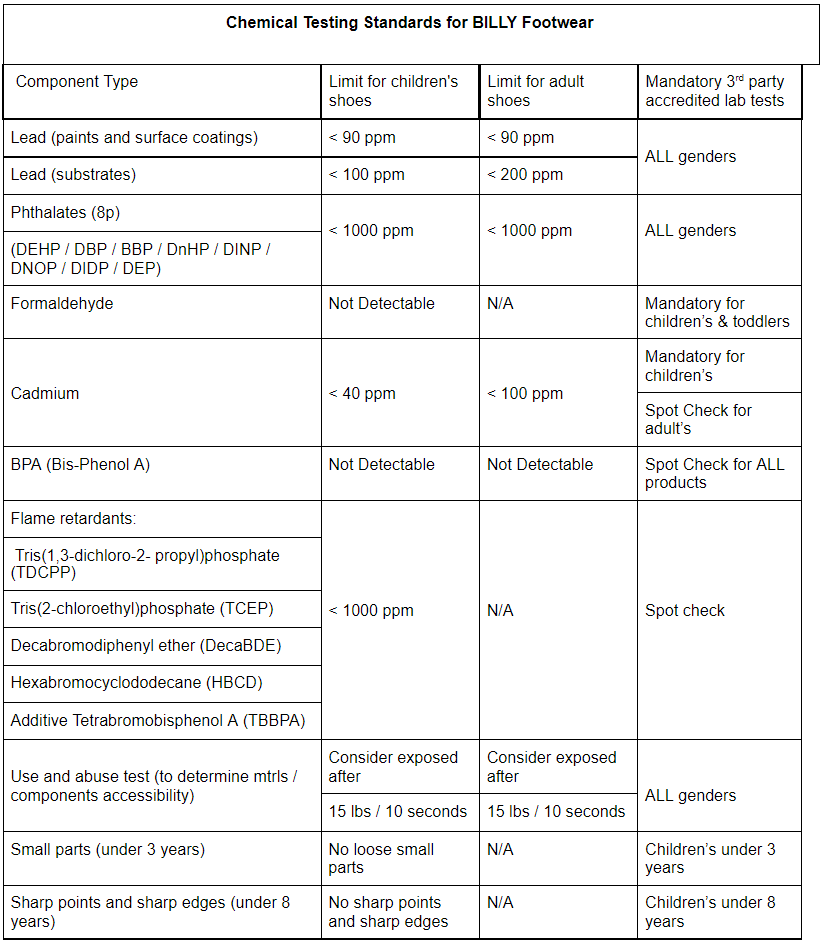
The Consumer Product Safety Improvement Act (CPSIA) enacted in 2008 regulates specific substances in children’s products including children’s footwear. The CPSIA sets limits for lead content and phthalates in children’s products. A children’s product is defined as a consumer product designed or intended primarily for children aged 12 years or younger. With respect to children’s footwear, Section 101(a) of the CPSIA restricts children’s products, including children’s footwear, and components of children’s footwear, to a lead content limit of 100 parts per million (ppm.) In addition, the use of paint or similar surface coating on children’s shoes must not exceed 90 ppm. The CPSC recently revised 16 CFR 1500.91(d)(7) to clarify that the Commission has determined that textiles that have treatments and applications consisting entirely of dyes do not exceed the lead content limits and are not subject to the third party testing requirements for children’s products, so long as those materials have not been treated or adulterated with materials that could add lead.
C. Tracking Labels for Children’s Footwear (not a separate tag requirement, please refer to Section 5/ Packaging Standards )
Tracking labels are required for all products that are designed and intended primarily for children ages 12 and younger, including children’s footwear. The tracking label must be affixed to the product (to the extent practical) and packaging, visible, legible, and provide certain basic identifying information, including: Manufacturer or private labeler name; Location and date of production of the product; Detailed information on the manufacturing process, such as a batch or run number, or other identifying characteristics; and Any other information to facilitate ascertaining the specific source of the product. For more detailed information click here.
D. Adult (Men’s, Women’s, Unisex) Shoes Only
Effective for buying season SPRING 2026:
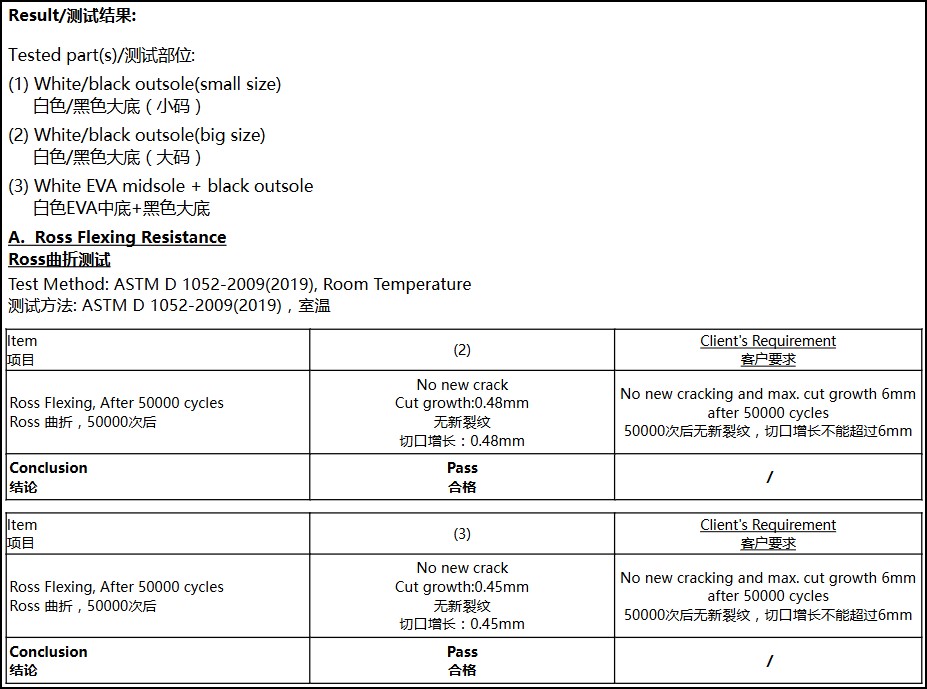
All adult styles will require the below testing in addition to all standard testing. Requirements and example below.
- Ross Flexing Resistance
- Compression Set
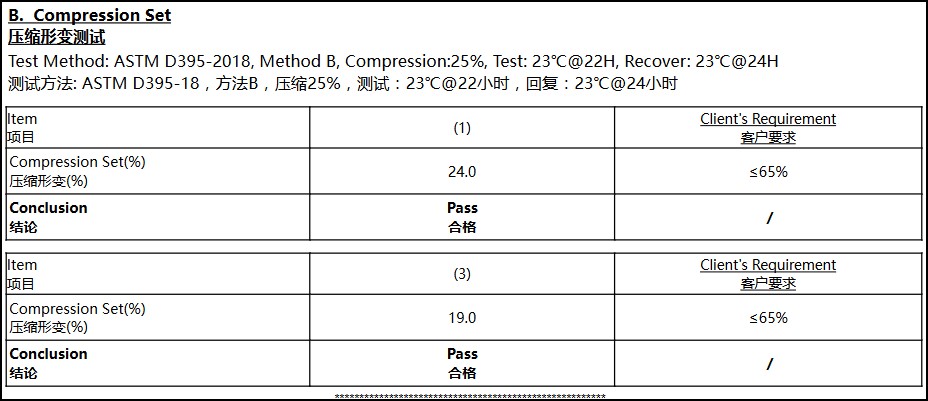
E. Certificates and Mandatory Third-Party Testing
All children’s footwear (kid’s and toddler) will need the test report and COC/GCC form sent to BILLY Footwear with the other standard shipping documents.
Section 102 of the CPSIA requires every manufacturer or importer of all consumer products that are subject to a consumer product safety rule enforced by the CPSC to issue a general certificate of conformity based on testing the product and stating that the product complies with the applicable standard, regulation, or ban. The certificate must accompany the product and be furnished to the retailer or distributor. Section 102 also requires the manufacturers or importers of children’s products (products designed and intended primarily for children age 12 years or younger) to certify that the products comply with all relevant product safety standards by issuing a children’s product certificate supported by tests performed by a CPSC-accepted third-party testing laboratory that has been accredited. CPSC also has regulations pertaining to certificates; they can be found at 16 CFR 1110. For more detailed information, see CPSC’s: FAQs – Certification and Third-Party Testing
F. Restricted Substance List (RSL)
The RSL includes only those materials, chemicals, and substances that are restricted or banned in finished home textile, apparel, and footwear products because of a regulation or law. In each case, the RSL identifies the most restrictive regulation. The RSL does not include regulations that restrict the use of substances in production processes or in the factory; rather the focus is on whether or not the substance can be found in finished home textile, apparel, and footwear products at a certain level. Click here to learn more.
G. Polyfluoroalkyl Substances (PFAS) Regulations
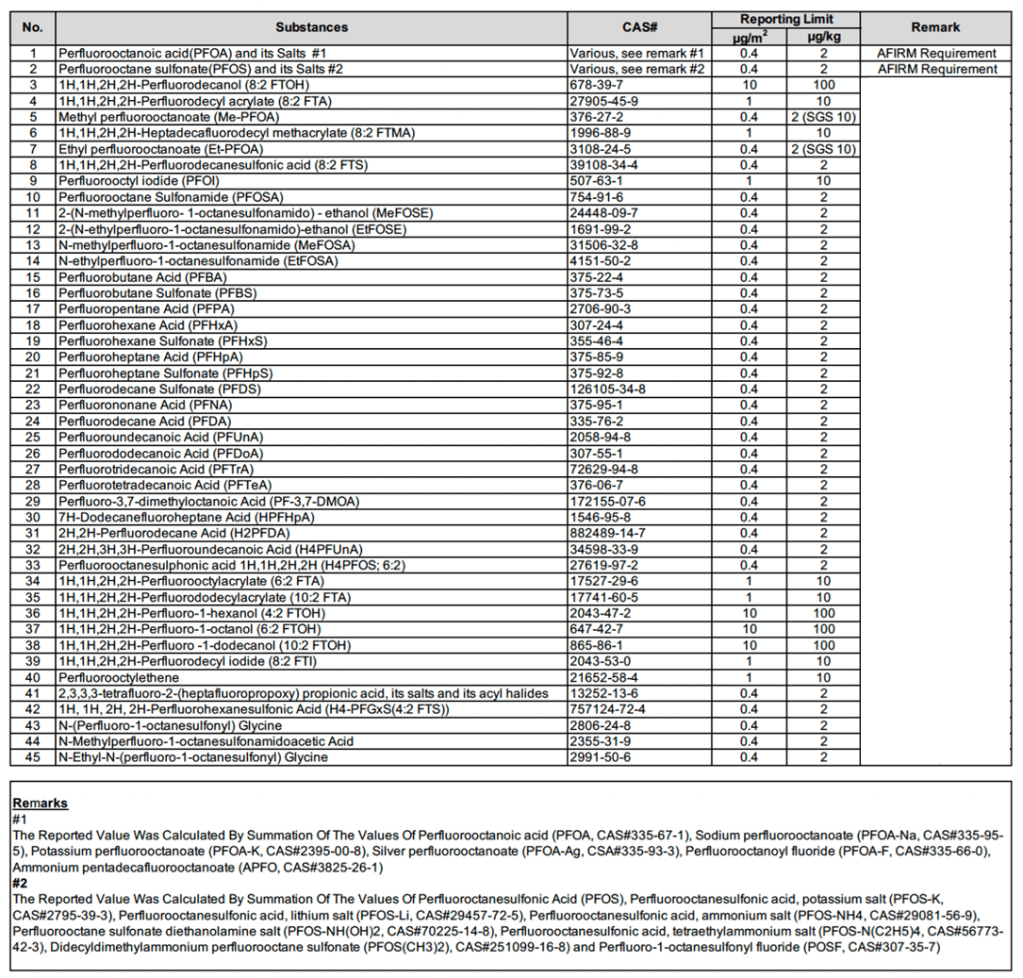
Several states in the USA have applied or will soon begin to apply regulations regarding Polyfluoroalkyl Substances (PFAS) and prohibits manufacture, distribution, or sale of textiles containing intentionally added PFAS. We expect all of our product to be produced in compliance of these regulations. We will need third-party lab results provided when requested.
Full list of substances as defined by the EPA can be found here: https://www.epa.gov/chemical-research/pfas-chemical-lists-and-tiered-testing-methods-descriptions
Effective immediately.
Please email Vendor_Compliance@billyfootwear.com if you have concerns about your products not meeting these requirements.
Examples of Materials within Scope of the Policy
| Natural Fibers Including semi-synthetics | Cotton, Wool, Silk, Hemp, Cashmere, Linen, Fur, Rayon (Semi-synthetic), Lyocell (Semi-synthetic) |
| Blended Fibers | Cotton-Polyester, Wool-Nylon, Ramie-Polyesters |
| Synthetic Fibers | Polyester, Acrylic, Nylon, Polyamide |
| Artificial Leather | Polyurethane (PU), Polyvinyl Chloride (PVC) |
| Natural Leather | Leather, Fur Skin |
| Coatings & Prints | Printing techniques such as: Heat transfers, Dye sublimation printing, Screen printing, Direct-to-garment printing, Discharge printing, Plastisol transfers. Coatings such as: Polyvinyl chloride (PVC), Polyurethane (PU), UV-cured |
| Natural Materials | Horn, Bone, Cork, Wood, Paper, Straw, Stone |
| Polymers, Plastics, Foams, Natural rubber & synthetic rubber | Ethylene vinyl acetate (EVA), Polystyrene (PS), Polyethylene (PE), Acrylonitrile butadiene styrene (ABS), Neoprene, Polypropylene (PP), Polycarbonate (PC), Polyamide (PA), Polyurethane (PU), Polyvinyl chloride (PVC), Thermoplastic polyurethane (TPU), Thermoplastic elastomer (TPE), Styrene ethylene butylene styrene (SEBS) |
| Metal | Stainless steel, Brass, Copper, Gold, Silver, Aluminum |
| Feather & Down | Feathers, Down |
| Glue | Hot melt adhesive, Powdered adhesive, Flock, adhesive, Contact, adhesive, Latex glue, Polyurethane, glue, Neoprene cement, Epoxies, Silicone adhesive, UV-cured adhesive |
| Packaging | Hangtags, Stickers, Protective Coverings, Trimmings, Sales & Transportation Packaging, Footforms |
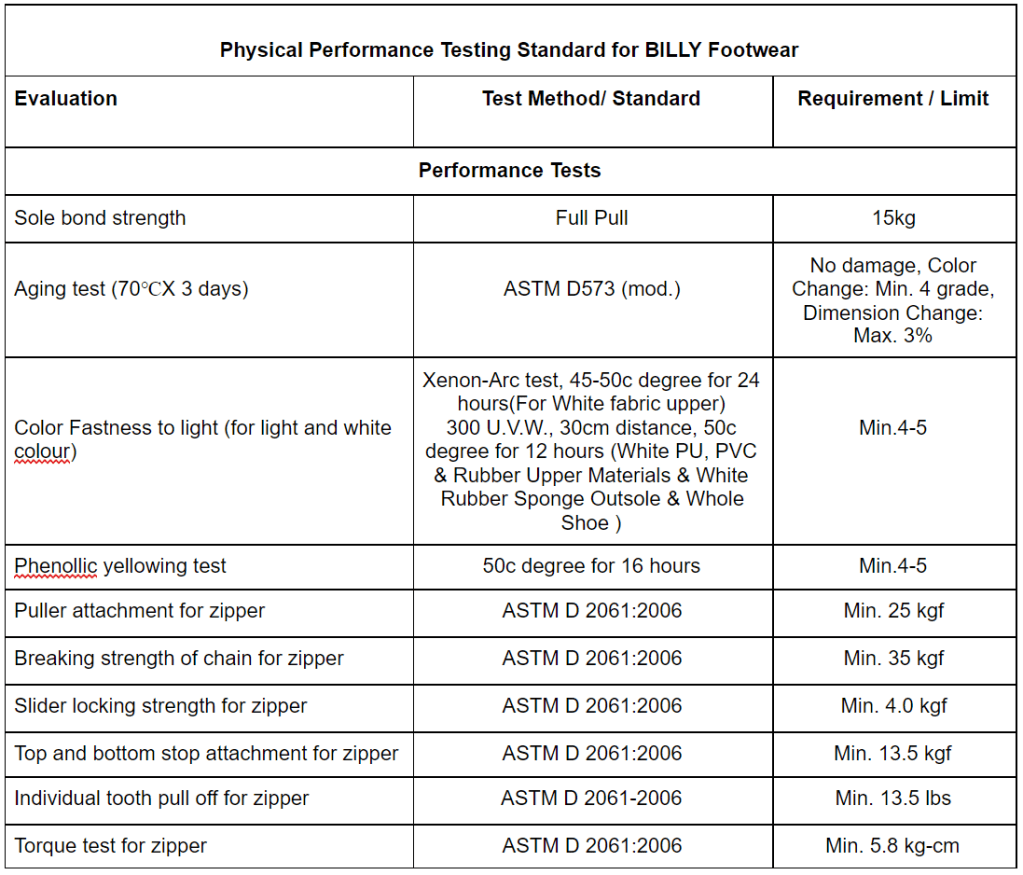
Below can be used as a guideline for testing results/requirements: